
See how safety signals become meaningful improvement.
A structured path for capturing safety signals, reviewing them in context, analyzing risk, taking action, measuring progress, and returning learning to the team.
Stronger signals. Safer teams. Better patient outcomes.
Following a signal
Follow a signal through Nexus.
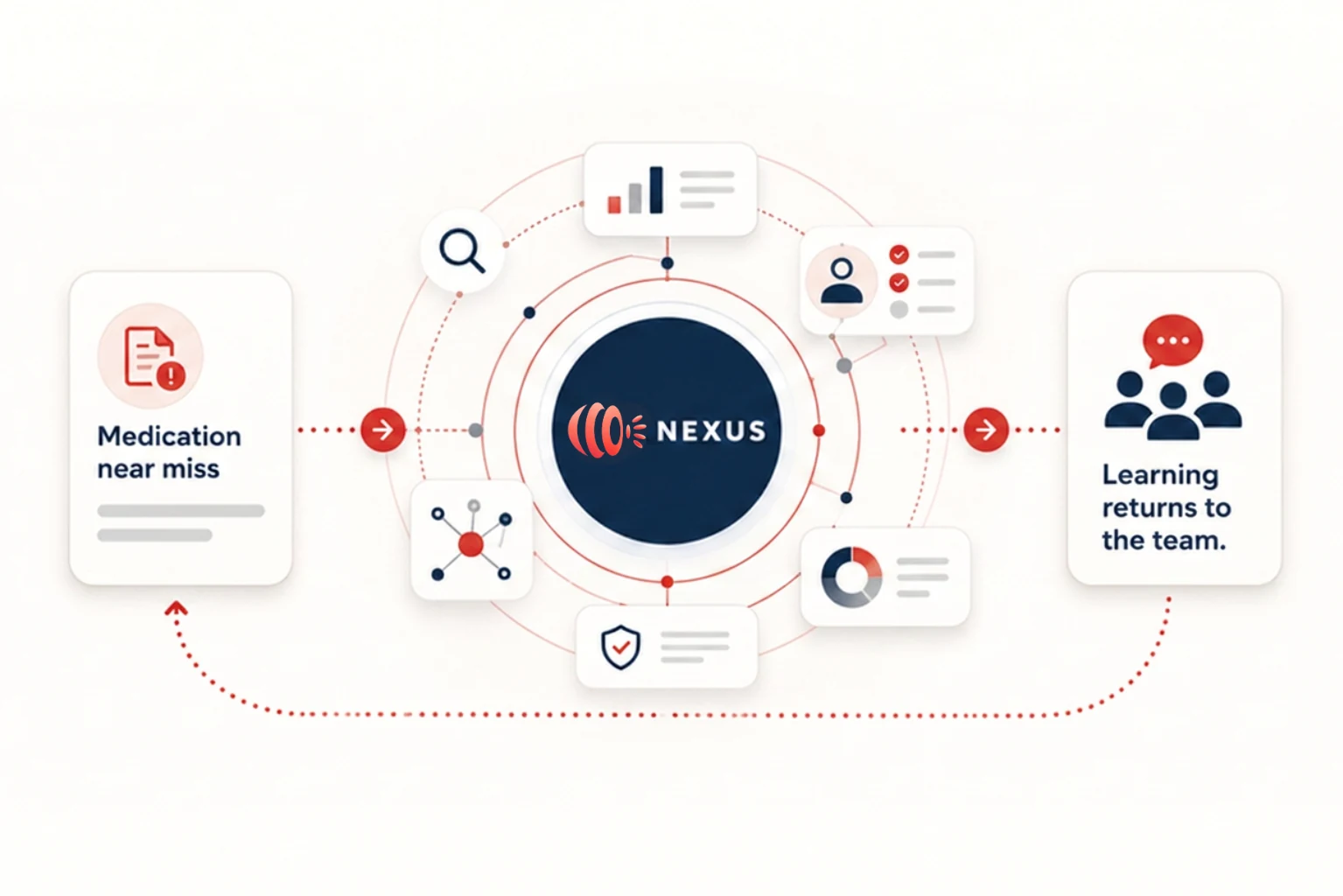
Choose a safety signal, then follow it through Nexus to see how review, analysis, action, measurement, and learning stay connected.
Medication near miss
A medication was prepared for the wrong patient but caught before administration.
- Context captured
- Patient, medication, location, timing, and where the error was caught.
- Current step
- Capture
Capture the signal while details are still fresh.
The medication, intended patient, location, timing, and point of interception are documented.
A quick way to report the concern without first deciding whether it is serious enough to matter.
Common questions
What people ask before they report.
How long does it take to file a report?
Most reports take less than two minutes. Features like image attachments can reduce the amount of descriptive typing needed, making it easier to capture what happened while the details are still fresh.
What happens after I submit an observation report?
Your report moves into a structured review process. From there, the team can understand what happened, identify contributing factors, assign follow-up, and decide what should happen next.
What happens with what I report?
Nexus helps teams move a concern from reporting through review, follow-up, and learning. If you provide your name, the team can follow up with you directly when needed. As concerns are investigated, solutions are considered, and changes are evaluated, Nexus helps make that learning easier to share back with the team.
What if I'm not sure it's worth reporting?
If something made you pause, it may be worth capturing. Harm, near misses, hazards, and recurring concerns can all reveal useful safety signals. You do not need to decide how significant something is before you report it.
What if the review decides nothing needs to change?
Not every signal requires immediate action. Nexus records what was reviewed, what was decided, and why. The signal remains part of the safety data, where it can contribute to a growing pattern over time or be reconsidered as priorities, risks, and additional information evolve.
Do I need to know who was involved?
No. Share what you know about what happened. You do not need to identify who was responsible. Nexus supports review of the contributing factors and conditions surrounding the event.