
A practical patient safety platform for veterinary organizations.

Nexus connects frontline reporting with structured review, signal analysis, action, measurement, and shared learning so patient safety work continues beyond the report.

Stronger signals. Safer teams. Better patient outcomes.
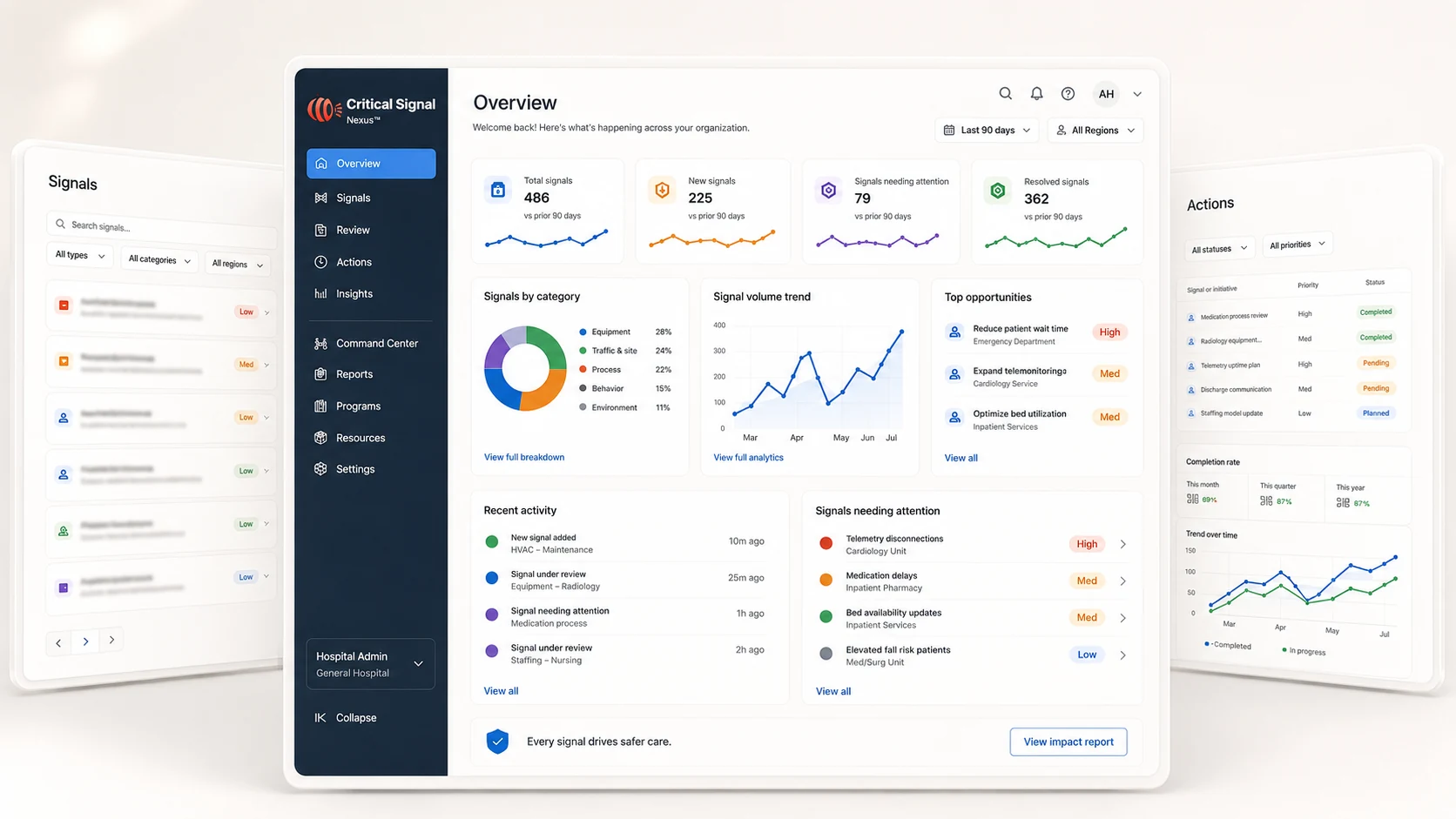
The Critical Signal Nexus overview dashboard - total, new, needing-attention and resolved signal counts, signals by category, volume trend, top opportunities, recent activity - flanked by the signals list and actions views.

What Nexus does

More than a reporting form. A system for learning from safety signals.

Collecting reports is only the beginning. Nexus connects capture, review, analysis, action, measurement, and learning in one structured patient safety workflow.

01

What is being reported?

  • Simple, structured reporting that captures what matters.
  • Context-rich details without extra admin burden.
  • Harm events, near misses, hazards, and other safety concerns.
02

What needs attention?

  • Structured review with consistent criteria.
  • Context and key details stay connected to the signal.
  • Urgent concerns or additional support needs can be identified early.
03

What patterns are emerging?

  • Connect reports to reveal recurring and emerging risks.
  • Explore patterns by location, team, role, or risk area.
  • Identify contributing factors across related signals.
04

Who should own the change?

  • Turn findings into defined improvement actions.
  • Assign ownership, due dates, and follow-up.
  • Track progress so action does not disappear after review.
05

Is the change making a difference?

  • Revisit related safety data after action is taken.
  • Track recurrence, trends, and progress over time.
  • Identify where additional improvement may still be needed.
06

What should return to the team?

  • Share findings and practical learning with the people who can use them.
  • Make improvement and follow-through visible.
  • Carry lessons forward into everyday practice.

Connected workflow

A report should start the work, not end it.

Nexus keeps review, analysis, improvement actions, follow-up, and learning connected in one place, so important safety work does not disappear across inboxes, spreadsheets, or separate conversations.

  1. 1CaptureReport the safety signal while the context is fresh.
  2. 2ReviewUnderstand what happened and what needs attention.
  3. 3AnalyzeConnect related signals and identify patterns or contributing factors.
  4. 4ActDefine the change, assign ownership, and move the work forward.
  5. 5MeasureRevisit the data and track whether risk is changing.
  6. 6LearnReturn findings and lessons to the teams who can use them.

Common questions

What teams ask before they bring this in.

Is this just a reporting form?

No. A form collects; Nexus carries what's collected through review, action and follow-up. The six questions above are the sequence. Capture is only the first.

We already use a spreadsheet and a shared inbox. What changes?

Nothing is lost, and the follow-through stops depending on one person remembering. Reports get an owner, a date and a visible outcome instead of accumulating in a folder.

Who can see a report?

Access follows role and location, so a reporter isn't exposed to the whole organization. Reviewers see what they need to act; the wider team sees what is shared back deliberately.

Can people report anonymously?

Your organization can choose to allow anonymous or transparent reporting. Whatever the policy, Nexus makes it clear before a report is submitted, so there is no uncertainty about whether the reporter's identity will be known.

Does Nexus create more administrative work?

Nexus is designed to reduce the manual work around patient safety. It keeps reports moving, tracks ownership and follow-up, and makes outstanding actions visible. Your team still makes the decisions; Nexus provides the structure to make sure the work does not get lost.